


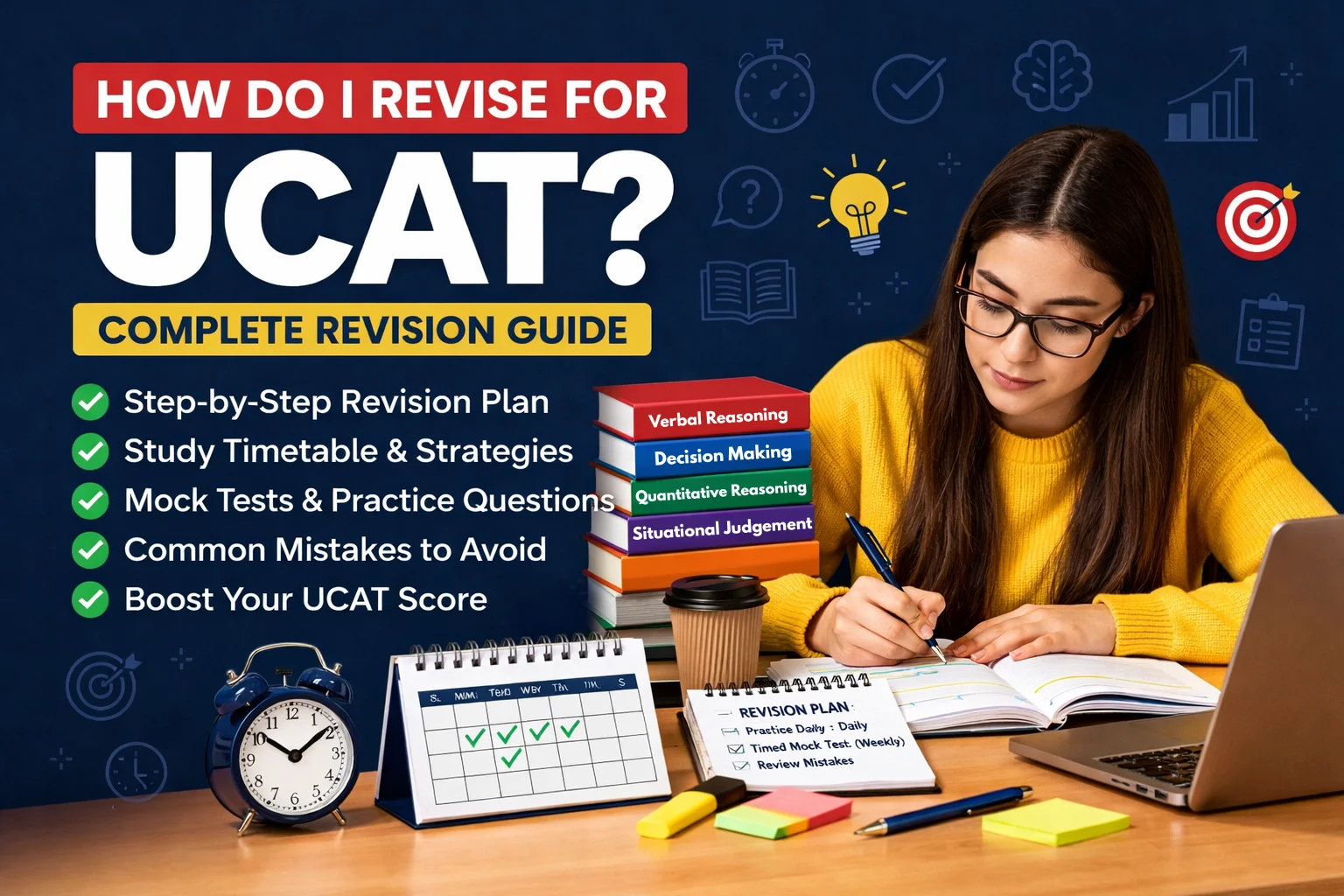
Preparing for the UCAT can feel overwhelming at first. Many students ask:
“How do I revise for UCAT effectively?”
The UCAT is not a traditional knowledge-based exam. It tests your reasoning, decision-making, and ability to perform under strict time pressure. This means revision requires a different approach compared to school exams.
In this guide, we explain the most effective UCAT revision strategies, how to structure your study plan, and the tools you need to succeed.
Understand the UCAT Before You Start Revising
Before creating a revision plan, it is essential to understand what the UCAT assesses.
The exam measures:
- Verbal reasoning
- Decision making
- Quantitative reasoning
- Abstract reasoning
- Situational judgement
- Speed and accuracy under pressure
Strong performance depends on:
- Practice
- Strategy
- Time management
- Consistency
This is why structured preparation is essential for success.
Step-by-Step UCAT Revision Plan
Step 1: Start with a Diagnostic Test
The first step in any revision plan is understanding your starting point.
Taking a full UCAT Mock Test allows you to:
- Identify strengths and weaknesses
- Understand timing pressure
- Set realistic score goals
- Track improvement over time
Many successful candidates begin with a diagnostic test before starting structured revision. You can use one of the official tests on the UCAT website.
Step 2: Create a Realistic Study Schedule
Consistency is more important than long study sessions.
A simple weekly plan might include:
Weekdays
- 1–2 hours of focused practice
- Review mistakes and learn strategies
Weekends
- Full-length practice test
- Performance review and improvement planning
A clear schedule helps reduce stress and maintain steady progress.
Step 3: Learn the Right Techniques for Each Section
UCAT success depends on strategy, not memorisation.
Students should focus on:
- Skipping difficult questions quickly
- Managing time effectively
- Recognising question patterns
- Using logical shortcuts
- Avoiding common mistakes
This is where structured teaching through UCAT Online Courses can provide significant advantages.
Step 4: Practice Under Timed Conditions
Timing is one of the biggest challenges in the UCAT.
You must train your brain to:
- Work quickly
- Stay focused
- Make decisions confidently
Regular timed practice improves:
- Speed
- Accuracy
- Confidence
Without timed practice, even strong students may struggle during the exam.
Step 5: Review Mistakes Carefully
Improvement happens during review, not just practice.
After each study session:
- Analyse incorrect answers
- Understand why mistakes happened
- Learn the correct strategy
- Apply the lesson in future practice
Students who review mistakes consistently improve faster.
How Long Should You Revise For UCAT?
Most students benefit from 6 to 8 weeks of structured revision.
However, competitive applicants often start earlier.
Here is a typical timeline.
8–10 Weeks Before the UCAT
Focus on:
- Learning question types
- Understanding exam format
- Building basic skills
5–7 Weeks Before the UCAT
Focus on:
- Practicing daily
- Improving accuracy
- Developing strategies
2–4 Weeks Before the UCAT
Focus on:
- Full-length mock exams
- Speed and time management
- Weak area improvement
Final Week Before the UCAT
Focus on:
- Light revision
- Confidence building
- Maintaining routine
Avoid last-minute cramming.
The Most Effective UCAT Revision Methods
Active Practice
Practice questions regularly rather than passively reading notes.
Spaced Repetition
Study smaller amounts consistently over time.
Timed Drills
Train under exam conditions.
Performance Tracking
Monitor progress using scores and feedback.
These methods are proven to improve performance.
Common UCAT Revision Mistakes to Avoid
Understanding mistakes can save valuable time.
Starting Too Late
Late preparation limits improvement and increases stress.
Studying Without Structure
Random practice leads to inconsistent results.
Ignoring Weak Areas
Avoiding difficult topics slows progress.
Not Taking Enough Practice Tests
Regular testing is essential for improvement.
How to Boost Your UCAT Score Effectively
Improving your score requires a combination of strategy and consistency.
Key actions include:
- Following a structured study plan
- Practicing daily
- Reviewing mistakes carefully
- Taking regular mock exams
- Learning proven techniques
- Staying consistent
Students who follow a structured system are far more likely to Boost Your UCAT Score and achieve competitive results.
The Role of Professional Support in UCAT Revision
Self-study can be effective, but expert guidance often accelerates improvement.
Professional support provides:
- Personalised feedback
- Proven strategies
- Structured learning plans
- Regular performance monitoring
- Accountability and motivation
This is why many students choose a structured UCAT Preparation Course to maximise their performance.
Using Free UCAT Resources Effectively
High-quality Free UCAT Resources can support revision and improve understanding.
Examples include:
- Practice questions
- Strategy guides
- Video tutorials
- Study plans
- Section-specific exercises
When used alongside structured preparation, these resources can significantly improve performance.
Signs You Need Additional UCAT Help
You may benefit from additional support if:
- Your scores are not improving
- You struggle with time management
- You feel overwhelmed by preparation
- You lack a clear revision strategy
- You want to achieve a top score
Seeking UCAT help early can make a significant difference.
Sample Weekly UCAT Revision Plan
Here is a simple and effective study structure.
| Day | Activity |
|---|---|
| Monday | Practice Verbal Reasoning |
| Tuesday | Practice Decision Making |
| Wednesday | Practice Quantitative Reasoning |
| Thursday | Practice SJT |
| Friday | Review mistakes and strategies |
| Saturday | Full-length mock test |
| Sunday | Rest and light revision |
Consistency is the key to success.
Final Thoughts
Revising for the UCAT requires more than hard work — it requires the right strategy, consistent practice, and structured guidance. Starting early, following a clear plan, and regularly testing your performance will significantly improve your chances of achieving a competitive score.
With the right preparation methods, students can build confidence, develop strong reasoning skills, and perform at their best on exam day.
Dr Admissions supports students through structured learning, personalised strategies, and expert guidance designed to help applicants succeed in the competitive medical admissions process.
Whether you are just starting your preparation or looking to improve your performance, the right support and consistent practice can make all the difference.