

Medical MMI Interview Course: Medical MMI Preparation Course - Dr Admissions

Medical MMI Interview Course: Medical MMI Preparation Course

Prepare for Medical School Interviews with a Former Interviewer

An 11-week live online programme designed to help students answer unfamiliar questions, handle challenging follow-ups and perform confidently in MMI, panel, Oxbridge and university-specific interviews.

£595 11 weeks Sundays 6 Sep-15 Nov 2026
Course fee Live programme 10:00am-12:00pm First session free
100% of Qualifying 2026 Students Received at Least One Offer

Every student in the 2026 entry cohort who completed a Dr Admissions Interview Course and at least one Dr Admissions mock interview received at least one medical or dental school offer.

This is the reported result for that qualifying cohort and is not a guarantee of future admission.

Start with the first live session free.

What You Get for £595

The Dr Admissions Medical School Interview Preparation Course is structured as a complete programme rather than a collection of isolated question banks or recordings. Students receive repeated teaching, practice and resources across the interview season.

  • 20 hours of live online teaching across 11 weeks
  • Recordings of every live session
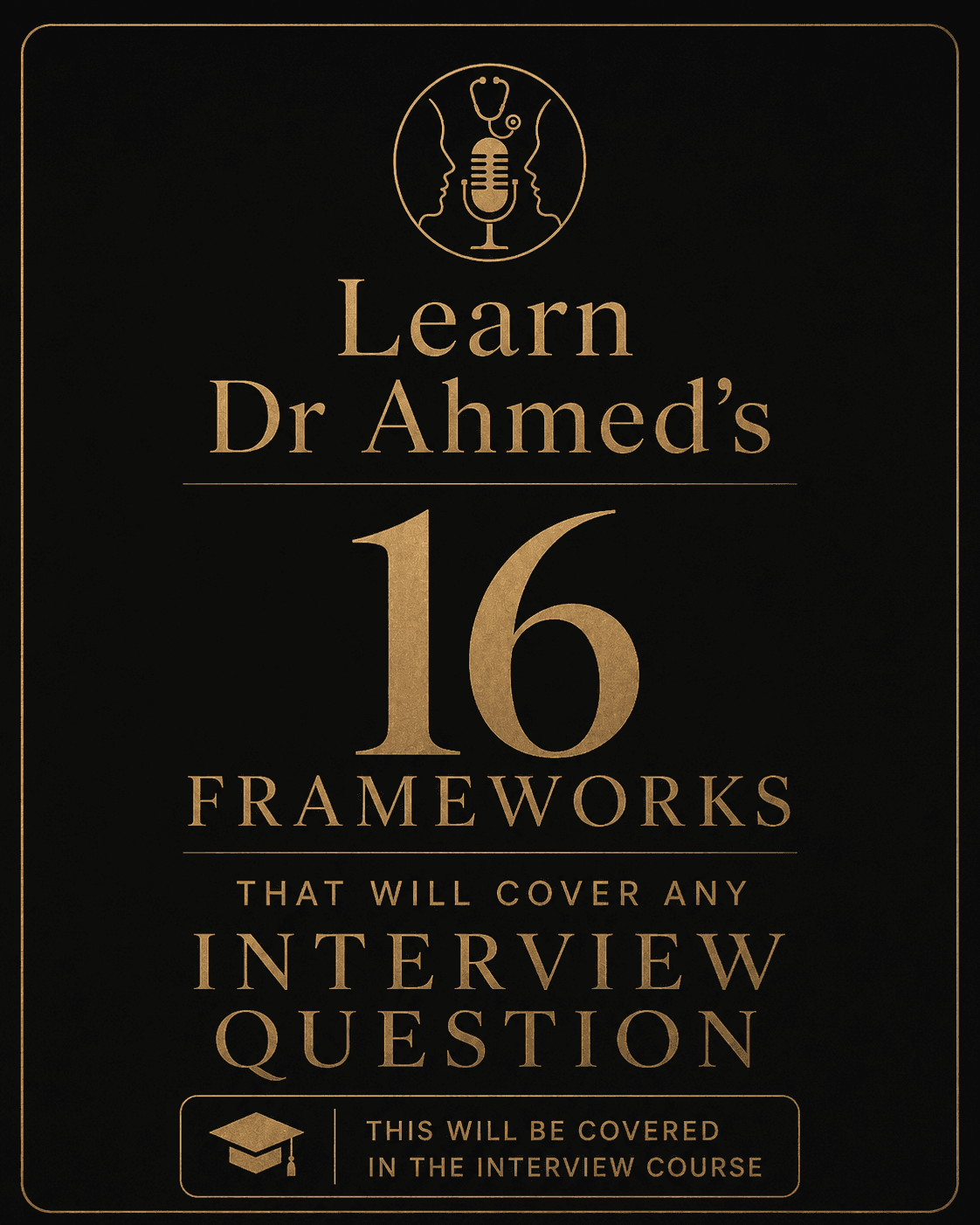
  • 16 structured answer frameworks
  • Weekly assignments and guided practice
  • Model-answer analysis
  • MMI, panel and Oxbridge-style preparation
  • NHS, ethics and healthcare current-affairs preparation
  • Two Interview Handbooks
  • Five recorded Specialist Masterclasses
  • Six real-time MMI role-play demonstrations

First session free: students can experience Dr Ahmed’s teaching before deciding whether to commit to the full programme.

Why Learn with a Former Medical School Interviewer?

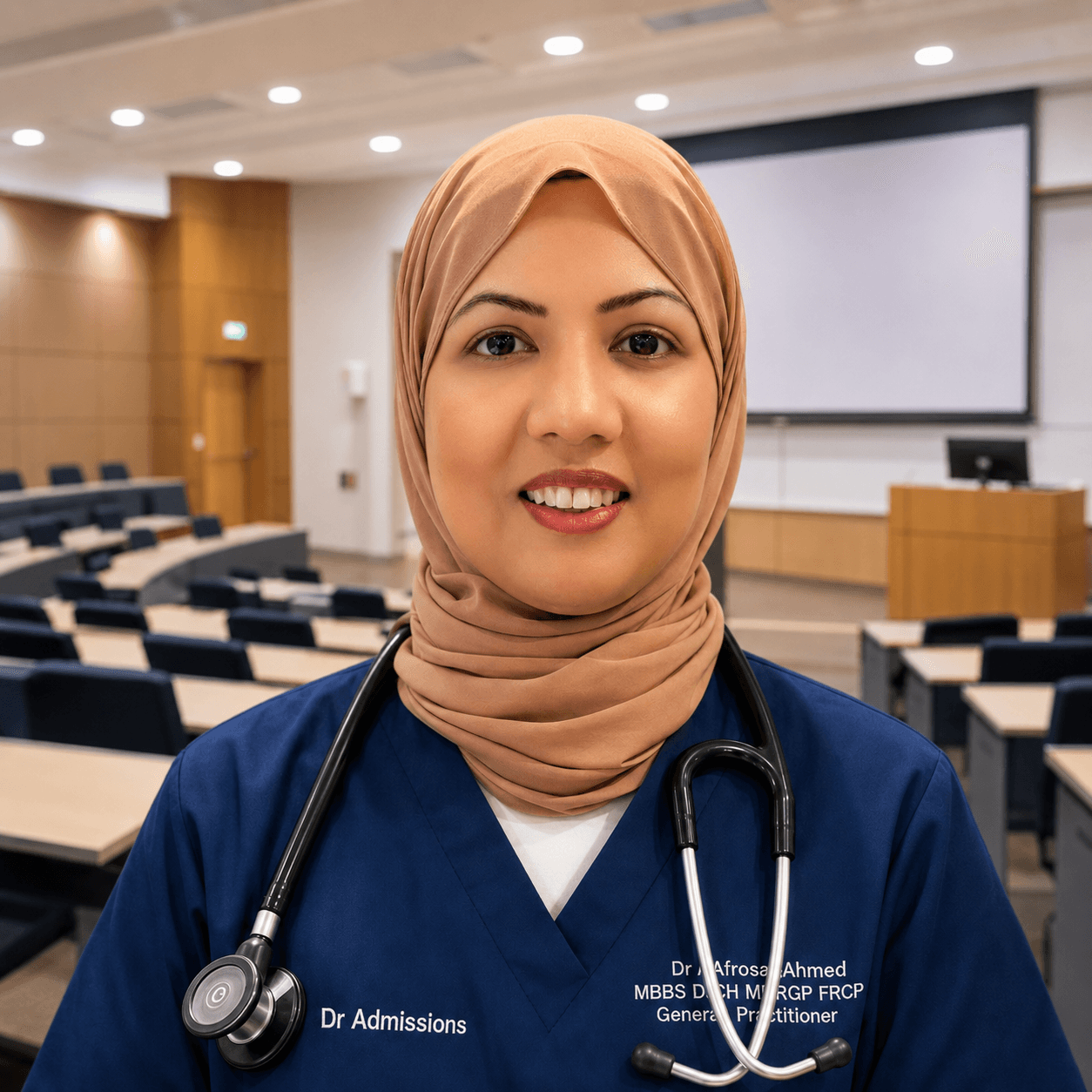
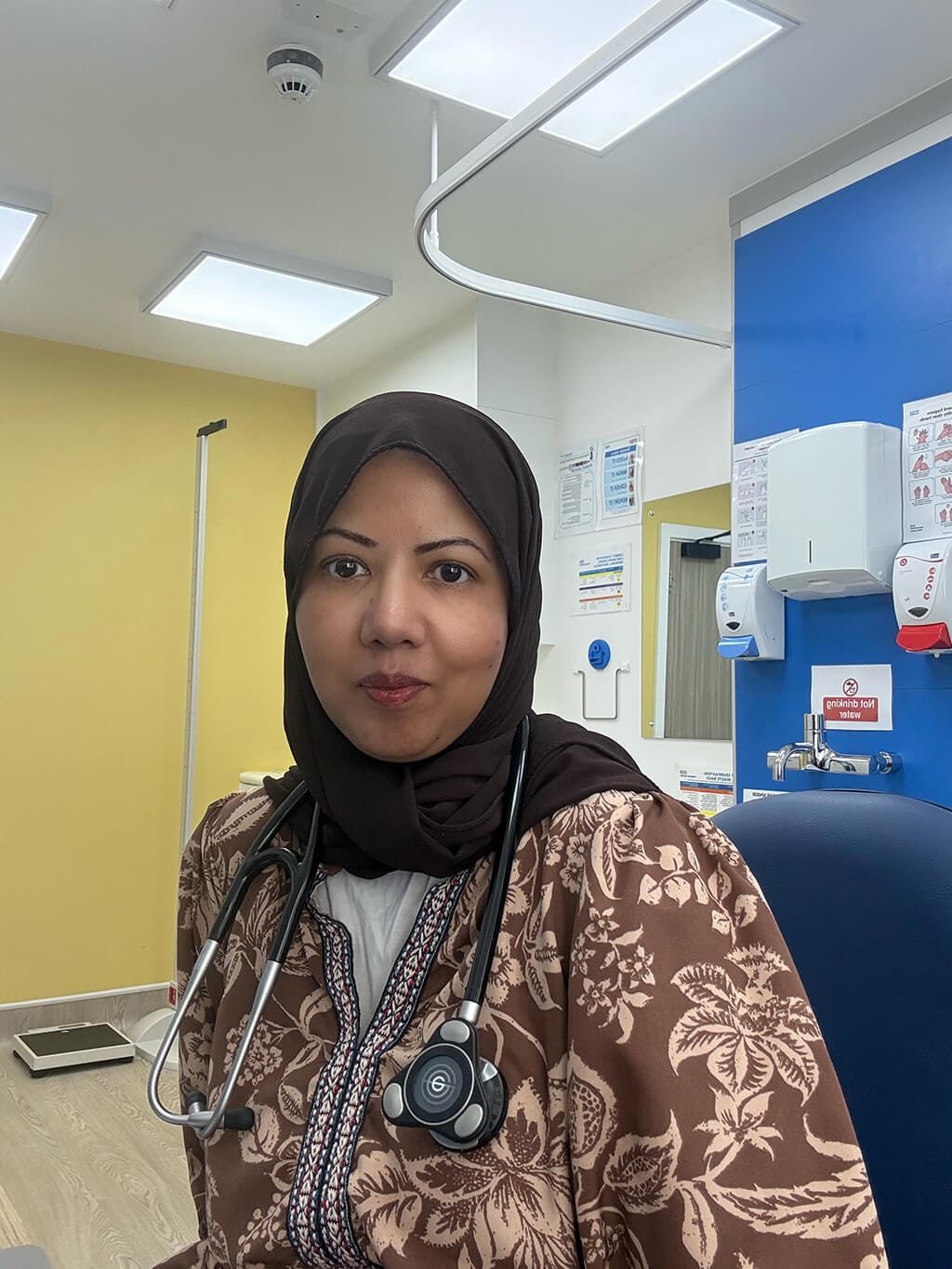
The programme is led by Dr Afrosa Ahmed, an NHS Consultant, former medical school interviewer and experienced medical educator. That matters because strong interview preparation is not simply about knowing common questions. Students need to understand what an assessor is looking for, how an answer is being evaluated and how to respond when an interviewer changes direction.

  • Former medical school interviewer
  • NHS Consultant
  • Experienced medical educator
  • Trained mindfulness coach
  • Personally leads the live teaching programme

Students therefore learn not only what they might be asked, but how to recognise the competency being assessed, organise their reasoning, communicate naturally and respond to follow-up questions without sounding over-rehearsed.

What Is a Medical School Interview?

A medical school interview allows an admissions team to assess qualities that cannot be judged from grades and admissions tests alone. Interviewers may explore motivation for Medicine, communication, reflection, empathy, professional judgement, ethical reasoning, teamwork, understanding of healthcare and the ability to think clearly under pressure.

Interview formats differ between universities. Some medical schools use Multiple Mini Interviews (MMIs), where applicants rotate through shorter stations. Others use panel interviews involving a longer discussion with several interviewers. Oxbridge and some university-specific formats may place greater emphasis on scientific reasoning, argument and unfamiliar problems.

Effective preparation therefore needs to go beyond memorising model answers. Applicants need a method that helps them identify what a question is assessing, organise their thinking and communicate their own experiences and reasoning naturally.

Why Medical Interview Preparation Matters

Knowing what an MMI or panel interview looks like is not the same as being able to perform well in one. Under timed conditions, students must interpret a question, select relevant evidence, structure a clear response and remain composed when an interviewer challenges an assumption or introduces a difficult follow-up.

Practising alone can help students generate ideas, but it does not reliably recreate interview pressure, unpredictable follow-up questions or external feedback. Students also tend to repeat questions they already know and may not recognise weaknesses in answer structure, reflection, reasoning or communication.

Why Interview Question Banks and Model Answers Are Not Enough

Medical interviews are difficult to prepare for by memorising complete answers. A familiar topic can be rephrased, converted into a scenario or followed by a challenge that tests whether the applicant can defend, refine or reconsider their response.

The course therefore does not attempt to provide a script for every possible question. Instead, students learn how to identify what is being assessed, apply structured thinking, use relevant evidence and experience, and adapt their response when an interviewer changes direction.

The aim is transferable interview technique

Students should be able to answer a question they have not seen before – not simply reproduce a polished answer to one they have memorised.

What Does Our Medical School Interview Preparation Course Cover?

The programme combines broad medical interview preparation with repeated application. Students learn principles and frameworks, practise using them in different question types and then refine their approach through assignments, demonstrations and model-answer analysis.

Medical Interview Fundamentals

Students learn how to recognise different interview formats, approach unfamiliar question types, structure answers clearly, manage time, communicate professionally and recover when an answer has not gone to plan. The focus is on building transferable interview technique that can be adapted to different universities.

Medical School Motivation

Preparation includes motivation for Medicine, understanding the role of a doctor, work-experience reflection, personal statement questions and explaining why a particular medical school or course is a good fit. Students are encouraged to use their own evidence and experiences rather than reproduce generic statements.

NHS & Healthcare Awareness

Students develop the ability to discuss NHS and healthcare issues with balance and context. Teaching includes healthcare current affairs, patient-centred care, multidisciplinary working and the wider environment in which doctors practise.

Medical Ethics

Core principles such as confidentiality, consent, capacity, autonomy, beneficence, non-maleficence and professional responsibility are incorporated into interview preparation. The emphasis is on applying ethical reasoning to a scenario rather than reciting a memorised framework.

Communication & Professionalism

Students work on empathy, active listening, clear explanations, role-play, difficult conversations and professional communication. Six real-time MMI role-play demonstrations by Dr Ahmed are included, covering scenarios such as an angry relative, breaking bad news, vaccine hesitancy and exploring concerns with someone who is feeling sad.

How Our Medical School Interview Preparation Works

Dr Ahmed’s InterVIEW™ Method gives students a repeatable process they can use during preparation and in a live interview.

Interpret – Identify what the question is asking and which qualities are being assessed.

Voice – Give a direct, clearly structured answer with logical progression.

Integrate – Support the answer with relevant evidence, reflection and personal experience.

Evaluate – Assess the strength of the response against interview expectations.

Work on Weaknesses – Use practice, feedback and reflection to improve weaker areas.

This structured approach is designed to move students beyond memorised model answers, helping them interpret unfamiliar questions, organise their thinking and communicate effectively under pressure.

Medical Panel Interview Preparation

Our medical panel interview preparation helps students manage the longer, more conversational format used by some medical schools. A panel interview may involve several interviewers exploring an applicant’s motivation, work experience, personal statement, professional values or views on current healthcare issues.

Students practise structuring longer responses, maintaining appropriate eye contact, speaking naturally to more than one interviewer and handling follow-up questions. They also learn how to defend an opinion while remaining balanced, refine an answer when challenged and avoid sounding over-rehearsed.

Examples of Medical Panel Questions

  • A patient refuses a treatment that you believe is in their best interests. How would you approach the situation?
  • You are part of a healthcare team and disagree strongly with another team member about what should happen next. What would you do?
  • A medical student tells you they have made a mistake but asks you not to tell anyone. How would you respond?
  • What is one major challenge currently facing the NHS, and how should it be addressed?
  • Tell us about a time when your initial approach to a problem was wrong. What did you learn?
  • Describe a situation in which you had to work with someone whose views or working style were very different from yours.
  • A patient becomes angry because they have been waiting several hours to be seen. How would you handle the situation?
  • Why Medicine rather than another healthcare profession, and what experiences have helped you reach that conclusion?
  • What have you learnt from work experience that challenged your previous assumptions about being a doctor?
  • A healthcare service has limited resources and cannot provide every available treatment to every patient. How should decisions be made?

Questions may begin with a familiar topic and then develop into a more challenging scenario or follow-up discussion. For example, an interviewer may begin by asking about teamwork and then ask what the applicant would do if another team member was underperforming or behaving unprofessionally.

Want to learn how to approach questions like these?

Medicine MMI Preparation

Medicine MMI preparation forms part of the wider programme. Students learn how to identify the purpose of a station, organise a response quickly and communicate effectively within strict time limits. Preparation can include ethics, role-play, communication, teamwork, motivation, problem-solving, data interpretation, situational judgement, NHS awareness and personal reflection.

Dr Admissions also has a dedicated Medical MMI Interview Course page covering MMI structures, station types, common mistakes and mock MMI practice in greater depth.

University-Specific Medical School Mock Interview

The 11-week programme is complete interview preparation in itself. Students who want to test their performance under university-specific interview conditions can additionally book a 1-to-1 mock interview adapted to the relevant university’s format.

  • One-hour interview session
  • Questions adapted to the relevant university’s format
  • At least one NHS doctor involved in the mock circuit
  • Assessment against defined interview competencies
  • Personalised verbal feedback
  • Written development points
  • Model-answer guidance
  • Clear priorities for final preparation

Optional mock interview fee: £150. Dr Admissions recommends at least one university-specific mock after the course so students can apply the course frameworks under pressure and identify final weaknesses before the real interview.

Personalised Interview Performance Review

Feedback can focus on answer structure, communication, reflection, reasoning, professionalism, confidence and the student’s response to follow-up questions. This gives the applicant a practical list of priorities for their final stage of preparation rather than simply telling them whether an answer was ‘good’ or ‘bad’.

Medical Panel Mock Interview

A medical panel mock interview is particularly useful for applicants who need to sustain a strong performance across a longer discussion. It can recreate panel-style questioning, challenging follow-ups and transitions between motivation, work experience, medical ethics, NHS issues and personal questions.

Practice Type What It Helps With
Question practice Developing ideas and examples
MMI practice Station-based performance
Panel mock interview Realistic panel discussion and follow-up questions
University-specific mock Applying skills to the relevant medical school’s format

Looking for a Medical Interview Crash Course?

Focused last-minute preparation can help when an interview is imminent, particularly if a student needs to prioritise answer structure, ethics, communication, MMI or panel technique and common interview mistakes.

However, the main Dr Admissions programme is deliberately not a one-day crash course. It uses 11 weeks of live teaching, weekly practice, assignments and recordings because interview performance develops through repeated application, feedback and refinement.

Who Is Our Medical Interview Preparation Course For?

  • Students who have received a medical school interview invitation
  • Students who want to prepare before interview invitations arrive
  • Applicants preparing for MMI interviews
  • Applicants preparing for panel interviews
  • Oxbridge applicants
  • Year 13, graduate-entry and international applicants
  • First-time applicants and reapplicants
  • Students who struggle to structure answers or communicate confidently
  • Applicants wanting realistic university-specific mock interviews
  • Students seeking systematic preparation rather than a one-day overview

Why Choose Dr Admissions?

Former-Interviewer Insight

Students are taught by Dr Ahmed, a former medical school interviewer, so teaching focuses on how assessors evaluate reasoning, reflection, professionalism and communication – not simply on producing polished model answers.

11 Weeks of Structured Live Teaching

The £595 programme includes 20 hours of live online teaching, recordings, 16 answer frameworks, weekly assignments, model-answer analysis and guided practice.

Specialist Interview Resources

Students receive two Interview Handbooks plus five recorded Specialist Masterclasses covering role play, ethics, Oxbridge interviews, NHS topics and interview confidence.

Optional University-Specific Mock Interviews

Students can add a £150 university-specific mock after the course to test their preparation under realistic conditions and receive personalised verbal and written feedback.

Reported 2026 Qualifying-Student Result

Every student in the 2026 entry cohort who completed an Interview Course and at least one Dr Admissions mock interview received at least one medical or dental school offer. This is the precise reported result for that qualifying cohort and is not presented as a guarantee of future admission.

Course Fee and Booking

Medical School Interview Preparation Course – £595

Dates: 6 September-15 November 2026

Time: Sundays, 10:00am-12:00pm

Format: 11-week live online programme

First session: Free

Optional university-specific mock: £150

Start Your Medical Interview Preparation

Medical school interviews test much more than knowledge. Students must think clearly, communicate naturally and respond effectively when an interviewer challenges or changes a question.

Join Dr Ahmed’s 11-week programme from 6 September 2026 and develop those skills through live teaching, structured frameworks and repeated interview practice.

First Live Session Free

Sunday 6 September 2026 | 10:00am-12:00pm

Experience the teaching before deciding whether to join the full programme.

FAQ

1. What does a Medical School Interview Preparation Course include?

A comprehensive course should combine interview technique with relevant medical admissions content. The Dr Admissions programme includes live teaching, answer frameworks, guided practice, MMI and panel preparation, ethics, NHS awareness, role-play, recorded masterclasses and access to university-specific mocks.

2. How should I prepare for a medical school interview?

Understand the format used by each medical school, build strong foundations in motivation, reflection, ethics and healthcare awareness, then practise communicating those ideas verbally. Preparation should focus on adaptable interview technique rather than memorising complete scripts.

3. What is the difference between an MMI and a panel interview?

An MMI usually consists of several shorter stations assessing different areas. A panel interview generally involves a longer discussion with several interviewers and can include more sustained follow-up questioning.

4. What happens during a medical school mock interview?

A Dr Admissions university-specific mock is a one-hour interview session using questions adapted to the relevant university’s format, followed by personalised verbal feedback, written development points, model-answer guidance and clear priorities for final preparation.

5. How can I prepare for a medical panel interview?

Practise longer discussions as well as individual questions. Be ready to explain motivation, reflect on experience, discuss healthcare and ethics, defend an opinion and respond naturally when several interviewers ask follow-up questions.

6. What types of questions are asked in medical school interviews?

Medical school interviews may include motivation, work experience, ethics, NHS awareness, communication, teamwork, leadership, professionalism, problem-solving, personal reflection and university-specific questions. Familiar topics may also be reframed as scenarios or followed by more demanding questions.

7. Can I take a medical interview crash course before my interview?

Focused last-minute preparation can help prioritise high-impact weaknesses when time is limited. However, the Dr Admissions main programme is an 11-week course designed to develop interview technique through repeated teaching, practice and reflection rather than provide only a one-day overview.

8. How can Dr Admissions help with medical school interview preparation?

Dr Admissions provides consultant-led preparation for MMI, panel, Oxbridge and university-specific interviews. Students receive 11 weeks of live teaching, structured frameworks, weekly practice, specialist resources and the option of a university-specific mock interview with personalised feedback.

    Book Courses

      Book A Free Consultation

      UCAT Courses 2026

      UCAT 2026 Courses

      2025 students scored 2650 and 2620

      View UCAT courses