

Strategic Application Services UK | Medicine & Dentistry Strategy

Strategic Applications

How to Choose Medical and Dental Schools Strategically

A strong medicine or dentistry application requires more than competitive grades and a good UCAT score. You must also choose medical or dental schools whose admissions processes suit your individual profile.

Universities assess applicants differently. Some place substantial weight on the UCAT, while others emphasise GCSE attainment, contextual information, predicted grades or a combination of several factors.

This guide explains how to compare admissions criteria, avoid unsuitable choices and build a balanced set of four UCAS options.

What Is a Strategic Medicine or Dentistry Application?

A strategic application matches your academic record, UCAT performance and personal circumstances to the selection criteria used by individual medical and dental schools.

To choose medical or dental schools strategically, first remove any university where you do not meet every compulsory requirement. Then identify which admissions factors favour your profile, such as UCAT performance, GCSE results or contextual eligibility. Finally, choose four universities that do not all rely on the same selection method.

It is not about finding an “easy” course. Medicine and dentistry are highly competitive, and no university should be treated as a guaranteed option.

The aim is to identify universities where you:

  • Meet every compulsory requirement
  • Align with the published shortlisting process
  • Compare competitively with recent admissions data
  • Have a credible chance of progressing to interview

Your strategy should consider:

  • UCAT score and Situational Judgement Band
  • GCSE grades and required subjects
  • Predicted or achieved A-level grades
  • Contextual or widening-participation eligibility
  • Resits and extenuating circumstances
  • Graduate qualifications
  • Home or international applicant status
  • Course structure and location preference

Each UCAS choice should have a clear, evidence-based rationale.

Why Applying Strategically Matters

Meeting the minimum entry requirements does not necessarily make you competitive.
Two medical or dental schools may publish similar academic requirements but use very different interview-selection systems. One may rank applicants primarily by UCAT score, while another may combine UCAT performance with GCSE results or contextual criteria.

A strong university choice should pass three tests:

  • Eligibility
    You meet all compulsory academic, UCAT, resit and applicant-status requirements.
  • Competitiveness
    Your profile aligns with the university’s shortlisting method and available admissions evidence.
  • Portfolio Strength
    Your four choices do not all depend on the same score, threshold or selection factor.

The Dr Admissions FIRM-4 Strategy

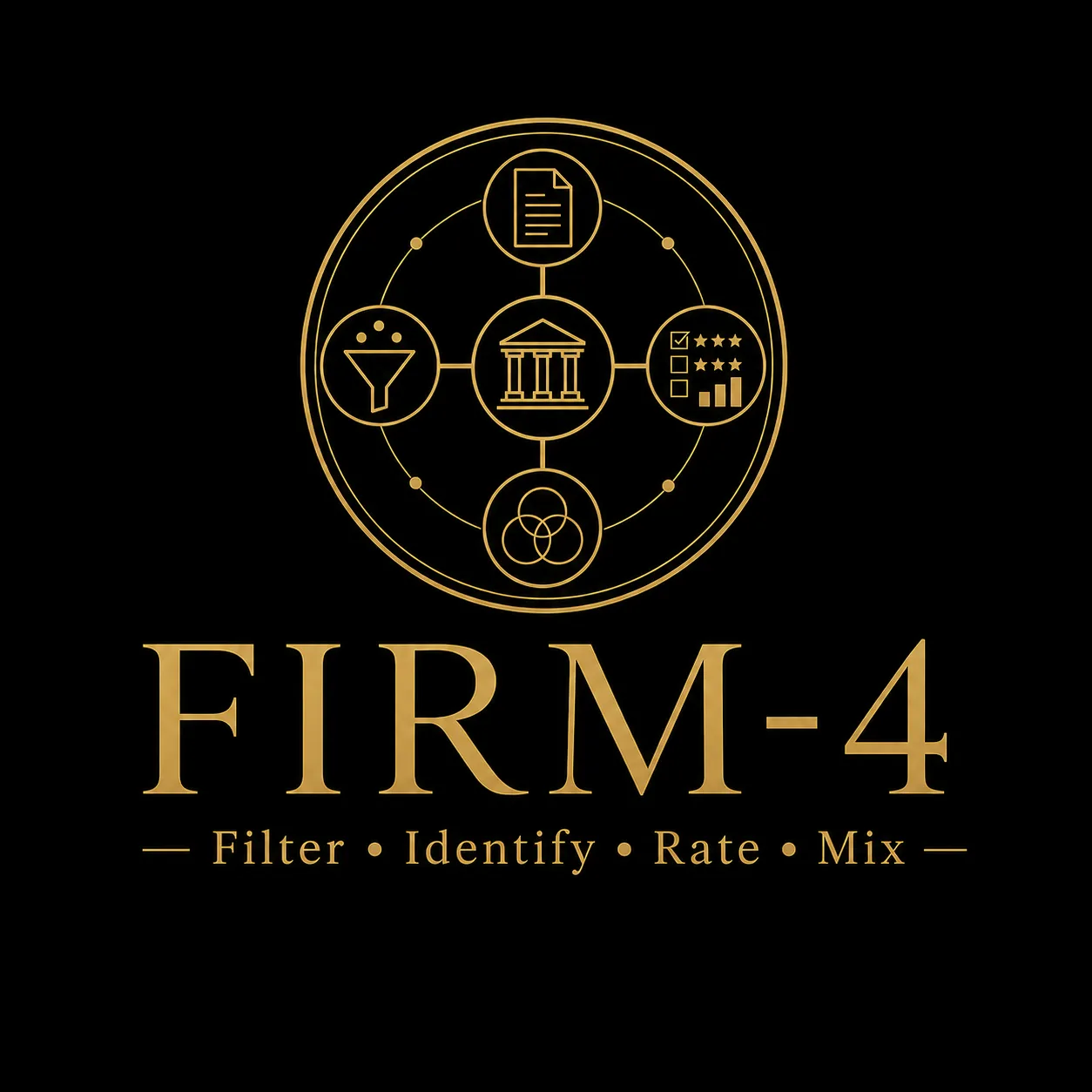
The FIRM-4 Strategy is a structured framework for building a balanced portfolio of medicine or dentistry choices. You can use the FIRM-4 Strategy independently when comparing your UCAS choices.

F — Filter for Eligibility

First, remove universities where you do not satisfy a mandatory condition.

Check:

  • GCSE subject and grade requirements
  • A-level or equivalent requirements
  • UCAT and SJT rules
  • Resit policies
  • Contextual criteria
  • Graduate-entry conditions
  • Home and international applicant rules
  • Dentistry-specific practical or work-experience expectations

An ineligible choice is not ambitious. It is ineffective.

I — Identify Your Advantage

Identify the strongest parts of your application and prioritise universities that reward them.
An applicant with a strong UCAT may benefit from a UCAT-heavy selection system. An applicant with exceptional GCSE results may be better suited to universities that formally score prior academic attainment.
For dentistry applicants, relevant strengths may also include evidence of manual dexterity, understanding of the profession and meaningful dental work experience where required.

R — Rate the Evidence

Assess the quality of the information behind each choice. Current university admissions policies are more reliable than historical cut-offs, forum posts or isolated applicant reports. Previous admissions data can support a decision, but it cannot guarantee a future interview threshold.

M — Mix Your Four Choices

Your final portfolio should contain four complementary roles.

For example, an applicant has a strong UCAT score, good predicted A-level grades and average GCSE results. They should first remove universities whose shortlisting systems heavily reward GCSE attainment. They may then prioritise universities that place more weight on the UCAT. Their final four choices should still include different selection systems so that all four applications do not depend on the same score.

Build a Balanced Set of Four Choices

Your four choices should not all carry the same level of risk. A clearer structure is:

1. Strong Match

A university where you meet all requirements and your profile fits the shortlisting process well.

2. Good Match

A university where you are competitive, but the outcome may depend on factors such as the applicant pool or annual UCAT thresholds.

3. Different Route

A university that assesses applicants differently from your other choices. This reduces the risk of all four applications depending on the same factor.

4. Ambitious Choice

A more competitive university where you still meet every requirement and have a realistic, evidence-based chance.

No medical or dental school is completely safe. The aim is to combine strong matches with one carefully chosen ambitious option. FIRM-4 is designed to manage risk without relying on misleading labels such as “guaranteed” or “easy”.

UCAT cut-offs can help you judge whether a university may be suitable, but they are often misunderstood. Read our guide to learn more about them.

Common Strategic Application Mistakes

Applying to four universities that all place heavy weight on the UCAT

Assuming that meeting minimum requirements makes you competitive

Using outdated entry requirements

Treating a previous UCAT cut-off as a guaranteed future threshold

Ignoring GCSE, SJT, resit or contextual rules

Choosing universities mainly because of rankings

Relying on forum posts instead of official information

Assuming a university suits you because a friend with similar grades and UCAT score received an offer, without knowing their full academic profile, contextual eligibility, applicant status or other circumstances.

How to Find Medical and Dental School Admissions Data

A strategic application depends on current, relevant and correctly interpreted information.

Start with the official entry-requirements tools

For medicine, use the Medical Schools Council’s entry-requirements tool. It allows applicants to compare UK medical schools.

Check MSC Entry Requirements

For dentistry, use the Dental Schools Council’s entry-requirements publication. It includes dentistry, dental hygiene and dental therapy courses.

Check DSC Entry Requirements

Check official university sources.

Start with the university’s course page and detailed admissions policy.

Look for:

  • Academic requirements
  • UCAT and SJT use
  • GCSE scoring
  • Resit rules
  • Contextual admissions
  • Interview-selection criteria
  • Work-experience expectations
  • Home and international policies
  • Course-specific dentistry requirements

Confirm that the information applies to your intended year of entry.

Review official UCAT statistics

Do not assess your UCAT score in isolation.

Compare it with the official mean, deciles and percentiles for your testing year. This provides a more useful indication of how your score compares with the national applicant cohort.

Avoid directly comparing scores across years where the test format or scoring system has changed.

Use Freedom of Information Data Carefully

Freedom of Information responses can provide useful historical statistics where universities do not publish them directly. FOI information is historical evidence. It should not be treated as a guaranteed future cut-off.

How to Compare Your Options

Comparing medical and dental schools can become confusing when every university presents its information differently.

Use the same checks for every course:

  • Do you meet the entry requirements?
  • Is your UCAT suitable?
  • Do you understand how applicants are shortlisted?
  • Is the information current and official?
  • Is the university a sensible choice for your profile?

To make this easier, use our free Medical and Dental School Comparison Checklist.

Use the Free Comparison Checklist

Use one copy for each university, then compare your final four choices using the Dr Admissions FIRM-4 Strategy.

From Strategic UCAS Choices to Interview

Choosing your four UCAS choices strategically can determine whether your application gets noticed — but the interview is what gets you the offer.

The next stage is the most important, and often the one students feel least prepared for.

Prepare properly with our Consultant-led interview course and learn exactly what medical and dental schools are looking for.

Book Your Interview Course

FAQ

How many medicine or dentistry courses can I apply to?

Applicants can normally use up to four UCAS choices across medicine and dentistry. A fifth choice may be used for another subject.

Is there a safe medical or dental school choice?

No medical or dental school is completely safe. Meeting the minimum entry requirements does not guarantee an interview. A strong choice is one where you meet all requirements and your profile fits the published shortlisting process.

How many UK medical schools can international students apply to?

International applicants can potentially apply to up to 10 UK medical schools — 4 through UCAS plus up to 6 additional medical schools that accept direct applications outside UCAS.

The additional options include:

  • University of Buckingham – no UCAT required.
  • University of Lancashire (UCLan) – established, GMC-accredited medical school; international applicants can apply directly.
  • University of Greater Manchester – a newer medical school; its 2026 cohort is currently open to international students and applications are made directly.
  • Brunel University of London – accepts international applicants directly and does not require UCAT or GAMSAT for international applicants.
  • University of Hertfordshire – a new medical school, with its MBBS delivered with support from City St George’s, University of London.
  • St Mary’s University, Twickenham – a new medical school, with the University of Lancashire as its contingency partner.

For international students, these additional direct-application routes can significantly increase the number of UK medical schools they can target beyond the standard four UCAS Medicine choices.

Should I choose universities based on rankings?

No. Rankings provide information about factors such as research, student satisfaction and graduate outcomes, but they do not show whether a university’s admissions process suits your applicant profile. Admissions criteria should be assessed first.

Can I apply strategically with a lower UCAT score?

Yes, but your options may be more limited. Look for universities that place less emphasis on the UCAT or consider academic attainment, contextual information and other factors alongside it. You must still meet every compulsory requirement.

Does the FIRM-4 Strategy guarantee an interview?

No. It is a decision-making framework designed to reduce avoidable errors and improve the quality of your four choices.

    Book Courses

      Book A Free Consultation

      UCAT Courses 2026

      UCAT 2026 Courses

      2025 students scored 2650 and 2620

      View UCAT courses