
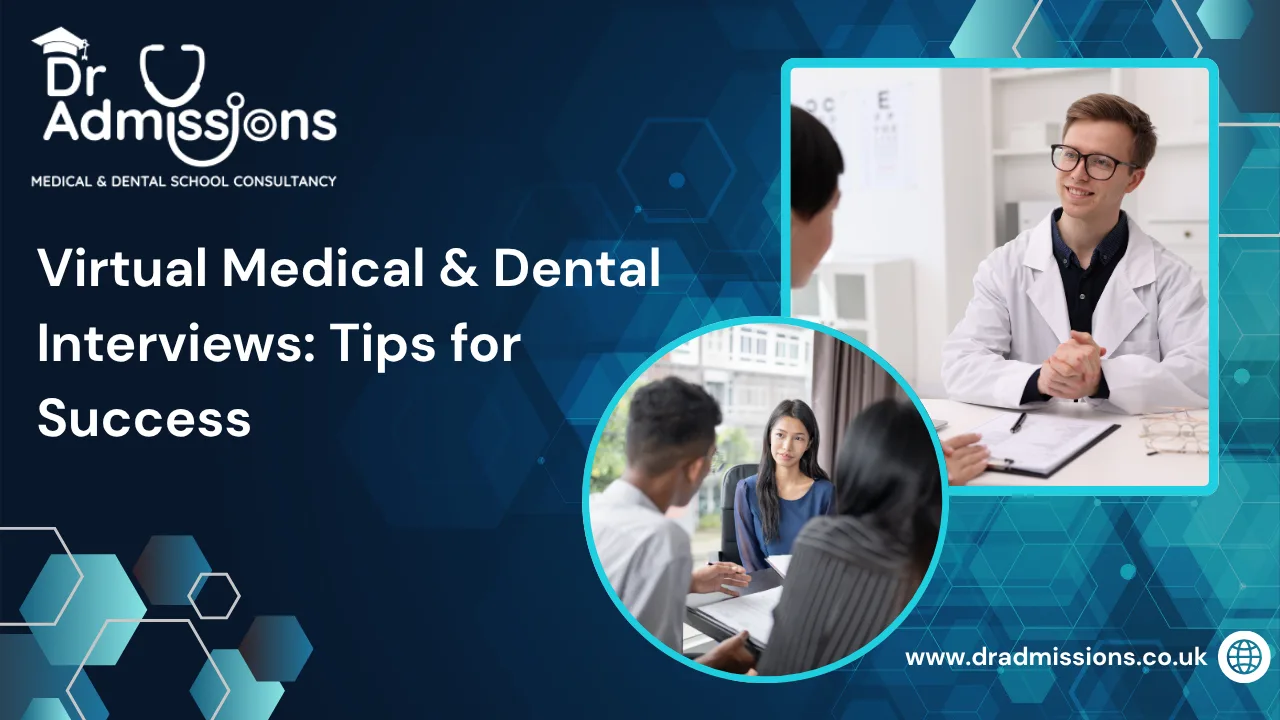
Virtual interviews have become a standard part of the medical and dental school admissions process. Universities now use online platforms such as SAMMI select, to assess candidates efficiently while maintaining high selection standards. For applicants, this means preparation must focus not only on interview content but also on communication, confidence, and professionalism in a virtual setting.
Strong preparation can significantly improve your chances of receiving an offer. In this guide, we share practical strategies to help you perform confidently in virtual interviews and demonstrate the qualities medical schools are looking for.
Why Virtual Medical & Dental Interviews Matter
Medical and dental school interviews are designed to assess more than academic ability. Admissions teams want to understand your motivation, communication skills, and suitability for a career in healthcare.
Virtual interviews evaluate:
- Communication and interpersonal skills
- Ethical reasoning and decision making
- Professionalism and confidence
- Understanding of medicine as a career
- Ability to perform under pressure
Because competition for medical and dental school places is extremely high, even strong applicants can struggle without proper preparation. This is why structured medical and dental school interview preparation is essential for success.
Understand the Virtual Interview Format
Most medical and dental schools use structured interview formats to ensure fairness and consistency.
Common formats include:
Multiple Mini Interviews (MMI)
This is the most widely used format for medical and dental school interviews. They can be online or in-person.
Candidates rotate through short stations that assess different skills, such as:
- Ethical decision making
- Communication
- Teamwork
- Problem solving
- Professional judgement
Practising through a realistic Mock MMI is one of the most effective ways to build confidence and improve performance. Dr Admission offers 121 university-specific mock interviews throughout the interview season, typically from November to February,
Panel Interviews
Some universities use panel interviews, where you do not rotate but 1 or 2 interviewers assess the candidate.
These interviews typically focus on:
- Motivation for studying medicine
- Personal experiences
- Understanding of healthcare challenges
- Knowledge of the medical profession
Online Scenario-Based Interviews
Many universities present candidates with scenarios to assess how they think and respond under pressure.
These scenarios test:
- Empathy
- Critical thinking
- Professional judgement
- Communication skills
Preparation helps you respond clearly and confidently.
Key Tips for Success in Virtual Medical Interviews
1) Attend a Coaching course by an ex-interviewer who is experienced in all formats.
Before starting interview practice, you need to review the theory, including hot topics, frameworks, and guidelines. Without this, you will not be able to tackle questions. The best person to teach is a Doctor who understands the profession and an ex-interviewer who is familiar with the marking scheme. Join the Dr Admission Interview Coaching course, which runs from September to November, so students are completely ready when interview offers start coming through.
For Medics and Dentists.
2) Practice Clear and Structured Answers
Virtual interviews require clear communication because body language may be less visible.
Focus on:
- Speaking clearly and confidently
- Structuring your answers logically
- Staying concise and relevant
- Demonstrating reflection and insight
Regular practice with a Medical & Dental School interview tutor can help you develop strong communication skills and improve the quality of your answers. Sign up for the Doctor-Led Dr Admissions 121 Mock Interview sessions. For medics and dentists.
3) Demonstrate Motivation for Medicine & Dentistry
Interviewers want to understand why you chose medicine/dentistry and whether you are committed to the profession.
Be prepared to discuss:
- Your reasons for pursuing medicine
- Work experience or volunteering
- Challenges in healthcare
- Personal qualities and values
Authenticity and reflection are key to strong answers.
4) Understand Medical Ethics and Professionalism
Ethical reasoning is a major component of medical and dental interviews.
Common ethical topics include:
- Patient confidentiality
- Consent and autonomy
- Professional responsibility
- Equality and diversity
- Teamwork in healthcare
Preparation through structured Medical & Dental School Interview Coaching helps students develop confidence when discussing complex ethical scenarios.
5) Practice Under Real Interview Conditions
Practice is one of the most effective ways to improve performance.
Simulated interviews help students:
- Experience realistic pressure
- Improve communication skills
- Receive personalised feedback
- Identify weak areas
- Build confidence
Participating in regular practice sessions with a Medical & Dental Admissions tutor can significantly improve readiness for the real interview.
6) Prepare Your Environment in Advance
Your surroundings play an important role in creating a professional impression.
Before the interview:
- Choose a quiet location
- Ensure good lighting
- Test your camera and microphone
- Use a stable internet connection
- Remove distractions
A professional environment helps you stay focused and confident.
Common Mistakes to Avoid in Virtual Medical Interviews
Understanding common mistakes can help you perform more confidently.
Poor Technical Preparation
Technical issues can disrupt your performance and increase stress.
Always test your equipment before the interview.
Speaking Too Quickly
Nervousness can lead to rushed answers.
Focus on:
- Taking pauses
- Speaking clearly
- Maintaining a steady pace
Giving Memorised Answers
Interviewers can easily recognise scripted responses.
Instead:
- Be natural
- Reflect on your experiences
- Show genuine interest in medicine
Lack of Structure in Responses
Unclear answers can make it difficult for interviewers to understand your reasoning.
Use a simple structure:
Situation
Action
Result
Reflection
You can only structure responses when you have the theory, so it is essential to attend an Interview Coaching course.
How to Prepare for Competitive Medical & Dental School Interviews
Highly competitive universities often expect strong communication skills, critical thinking, and professional awareness.
For example, preparation for Oxford Medical Interviews typically involves:
- Advanced ethical discussions
- Problem-solving scenarios
- Clear communication under pressure
- Reflection on academic and personal experiences
Focused preparation helps candidates demonstrate the qualities required by top universities.
The Benefits of Professional Interview Preparation
Professional support can significantly improve performance and confidence.
Students who receive structured preparation often benefit from:
- Personalised feedback
- Realistic interview simulations
- Expert guidance from experienced professionals
- Improved communication skills
- Increased confidence
Many applicants choose structured preparation because it provides a clear strategy and consistent support throughout the admissions process.
Final Thoughts
Virtual medical and dental interviews require preparation, confidence, and strong communication skills. Success depends on understanding the interview format, practising regularly, and demonstrating genuine motivation for a career in medicine/dentistry.
With the right preparation and guidance, students can approach interviews with confidence and perform at their best.
Dr Admissions provides structured interview training, personalised feedback, and realistic interview simulations designed to help students succeed in competitive medical/dental school admissions. Through expert support and targeted practice, applicants can build confidence and maximise their chances of receiving offers.